

Dr Vasishth's Ayurvedic Hair tonz Hair Health Oil 100 ML
1 X 100 ML
Sale price
$19.99 USD
Regular price
$29.99 USD
Skip to product information


Dr Vasishth's Ayurvedic Hair tonz Hair Health Oil 100 ML
Sale price
$19.99 USD
Regular price
$29.99 USD
Pickup currently not available
Melionsbrother
SIZE OIL 100 ML
Multi‐drug ayurvedic formulation that helps in the management of alopecia areata, low/slow hair growth, abnormal hair‐fall, dandruff etc.
-
Revitalize / tone up hair follicles (keshya, rasayana)
-
Promote hair growth, strengthen hair (kesha‐vardhaka, rasayana)
-
Check abnormal hair fall (kesha‐patan‐hara)
-
Improve skin health (tvachya)
-
Eradicate dandruff (darunaka‐hara)
Bhringaraj (Eclipta alba)
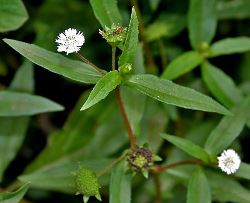
Bhringaraj is a well known remedy for the treatment of hair and skin diseases. Most of the people know that Bhringaraj is an excellent medicine against hair problems when used as Bhringaraj oil. Yet, the fact is, Bhringaraj is far more effective when taken internally by mouth as tablets. Not only it tones up the hair follicles and helps restore natural hair color, but it improves skin health, too.
Amalaki (Emblica officinalis)
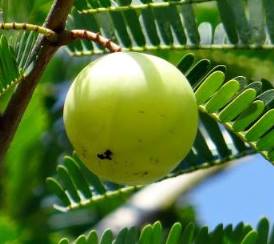
Amalaki is a rich source of natural vitamin C, an antioxidant (rasayana) that promotes regeneration of tissues (dhatu-vardhaka) and reinforces immunity (balya). Amalaki is also known as Emblica officinalis.
Brahmi (Bacopa monnieri)
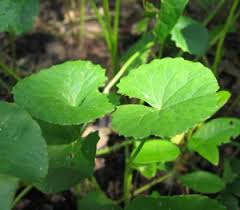
Brahmi is anti-thrombotic and cardio-protective. It stimulates thyroid gland in hypothyroidism. It is immuno-stimulant(rasayana). It evokes a gene-expression response for wound healing and microangiopathy. It is anti-oxidant and useful in various venous and arterial problems. It stabilizes hypoechoic, low-density plaques and remodels echolucent plaques by remodeling collagen synthesis. It is useful in diabetic microangiopathy by improving microcirculation and decreasing capillary permeability. In an experimental study, a dose (100-1000mg/kg) dependent reduction in percent left ventricle necrosis (PLVN) as well as in lipid peroxide levels was observed in rats treated with alcohoic extract of Hydrocotyle asiatica orally for 7 days compared to control animals. The study strongly suggests the cardioprotective activity of Hydrocotyle asiastca in limiting ischemia-reperfusion induced myocardial injury. Brahmi is also known as Hydrocotyle asiatica.
Gunja (Abrus precatorius)
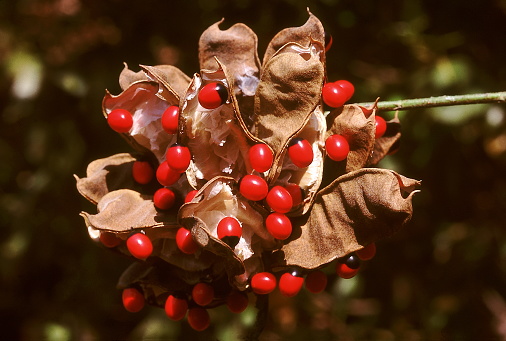
Gunja revitalizes hair follicles (keshya).
Karanja (Pongamia glabra)
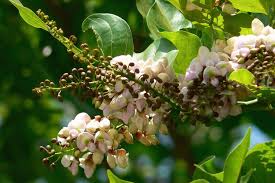
Karanja is anti-infective (krimi-jit), wound-healing (vrana-apaha), and effective in skin disorders (kushtha-jit).
Chitrak (Plumbago zeylanica)
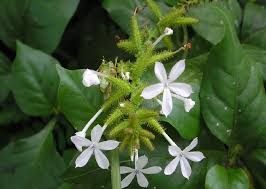
Chitrak, is one of the oldest plants known for its medicinal value and is considered as Rasayana in Ayurveda. It is grown throughout India in the wild or cultivated state due to its health benefits. Chitrak root is beneficial in managing diabetes. It lowers blood glucose levels by enhancing insulin secretion due to its anti-diabetic and antioxidant properties. Chitrak also reduces the blood cholesterol and triglyceride levels and thereby, helps in weight loss. It also aids in reducing anxiety and calming the brain activity as it suppresses the central nervous system due to its relaxant properties. According to Ayurveda, it helps improve the digestive system due to its Deepana (appetizer) and Pachana (digestion) properties. It also helps manage atherosclerosis as it prevents the deposition of fatty substances in arteries and maintains the blood flow in the body. Chitrak can also be used for external purposes. It helps in managing various skin diseases such as acne, sore, dermatitis due to its antioxidant and antimicrobial properties. It also accelerates wound healing owing to its antioxidant properties and helps in the formation of new skin cells.
Mehandi (Lazonia alba)
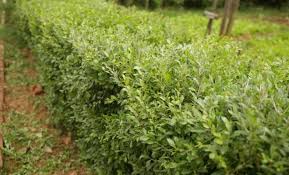
Mehandi colors the hair (anga-rago).
Methika (Trigonella foenum-graecum)
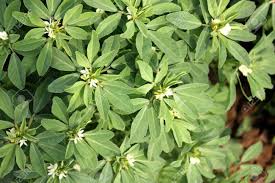
Research on fenugreek in recent years has identified a number of health benefits and physiological attributes in both experimental animals as well as clinical trials in humans. Its known medicinal properties such as carminative, gastric stimulant, antidiabetic and galactogogue (lactation-inducer) effects, newer research has identified hypocholesterolemic, antilipidemia, antioxidant, hepatoprotective, anti-inflammatory, antibacterial, antifungal, antiulcer, antilithigenic, anticarcinogenic and other miscellaneous medicinal effects of fenugreek. Although most of these studies have used whole seed powder or different forms of extracts, some have identified active constituents from seeds and attributed them medicinal values for different indications.
Madhuyashti (G. glabra)
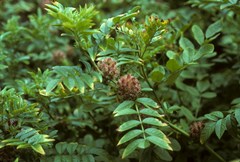
product-image Yashtimadhu revitalizes hair follicles (keshya), helps restore natural hair color (varnakrit), is anti-inflammatory (shotha-apaha), and anti-toxic / anti-allergic (vishapaha). It protects skin and hair against oxidative processes and promotes hair growth.
Japa-pushpa (H. rosa sinensis)
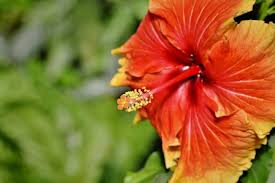
Hibiscus promotes hair growth and prevents premature hair greying by reducing excessive body heat, stimulating blood circulation to the scalp, and increasing the supply of essential nutrients to the hair follicles. Intellectuals with a Pitta-predominant constitution and people into the work habit of staying awake during late nights tends to lose their hair due to excess heat trapped under the skin. Hibiscus tea helps regulate that excess heat and balance Pitta.
Majuphala (Quercus infectoria)
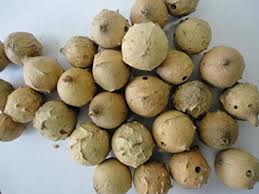
The galls of Quercus infectoria have also been pharmacologically documented to possess astringent, antidiabetic, antitremorine, local anaesthetic, antiviral, antibacterial, antifungal, larvicidal and anti-inflammatory activities. The main constituents found in the galls of Quercus infectoria are tannin (50-70%) and small amount of free gallic acid and ellagic acid.
Nimba (Azadirachta indica)
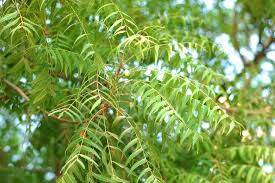
Nimba is anti-infective (krimi-pranut), anti-pruritic (kandu-pranut), wound-healing (vrana-pranut), anti-allergic (visha-pranut), and effective in skin disorders (kushtha-hara).
Daruharidra (Berberis aristata)
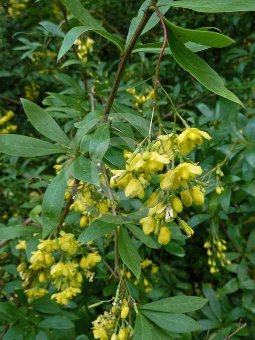
Daruharidra reinforces digestive enzymes (deepana), corrects hepatic dysfunction (yakird-uttejaka), reduces engorgement (grahi) of veins. It is especially useful for the management of bleeding piles (rakta-arsha) and hepatic disorders. It is used for the management of hemorrhoids (arshoghna). It is used for several remedies as a tonic, alternative, demulcent, diaphoretic, and diuretic, in the treatment of diarrhea, jaundice and skin diseases, syphilis, chronic rheumatism and urinary disorders. Scientific evidence suggests its versatile biological functions that support its traditional use in the orient. Phytochemical studies shows that plant Berberis aristata contains mainly yellow colored alkaloids Berberine, oxyberberine, berbamine, aromoline, a protoberberine alkaloid karachine, palmatine, oxycanthine and taxilamine and tannins, sugar, starch. It reduces engorgement of veins. Daruharidra is also known as Berberis aristata.
Kaidarya (Murraya koenigii)
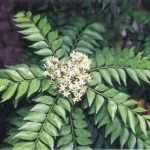
Kaidarya revitalizes hair follicles (keshya).
Tila (Sesamum indicum) oil
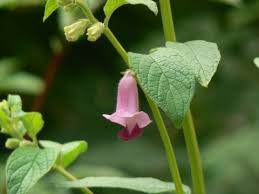
Sesamum indicum L., commonly known internationally as sesame, is one of the oldest oilseed crops. Worldwide, it is used for its nutritional, medicinal, and industrial purposes. Sesame were demonstrated to exhibit antioxidant, antimicrobial, antiinflammatory, antidiabetic, anticancer, antihyperlipidemic, hepatoprotective, anthelmintic, antileishmanial, gastroprotective, larvicidal, and vasorelaxant activities, among others.
Narikela (Cocos nucifera) oil
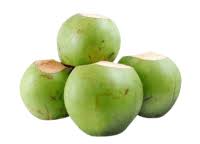
Cocos nucifera.
Weight
115 g
Dimensions
140 x 55 x 38 cm
Dosage:
Apply the oil on the scalp. Massage gently for 15‐20 min., once / twice day. The hair could be washed with some herbal shampoo / soap, later on.
Precautions:
In case of hypersensitivity to any of the ingredients, discontinue using the oil.
Available as:
Bottle containing 100 ml oil.
Thank You